
 Subscribe!
 Visit Our Facebook page
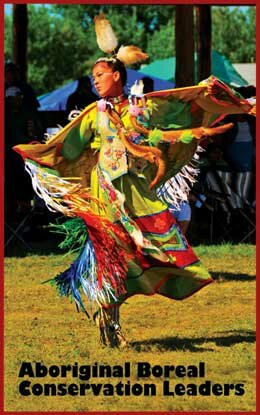
Welcome to the Aboriginal Boreal Conservation Leaders Project
This website consists of two partnering components: the Aboriginal Boreal Conservation Leaders series, and a Volunteer/Employment Recruitment program.As Manitoba's boreal forests consist of a primarily Aboriginal population, conservation efforts benefit greatly from the knowledge and experience of individuals who have lived and breathed community life in Manitoba's northern boreal. We believe this project, through the sharing of personal interest stories and posting of employment/volunteer opportunities, will increase Aboriginal involvement in Manitoba boreal wilderness protection efforts.
Latest News:
Spanish in Manitoba
Several academic institutions and for-profit organizations provide online courses. You can locate a Spanish language teacher, for instance, at https://livexp.com/skills/spanish. Thanks to the platform's flexibility, you can select an online tutor based on their educational background and areas of interest. Lesson plans are developed by Spanish teachers based on the abilities and characteristics of the students.
Trina Flett – Ochiwasahow- Our Responsibility
 You have a choice. And a responsibility. Trina Flett would like you to think about that. Her home community sits on the shores of Lake Winnipeg surrounded by one of the largest tracts of boreal forest in Canada. The Ochiwasahow, Cree for Fisher Bay, Park Reserve provides interim protection from industrial developments, protecting the area’s thriving biological diversity, long sandy beaches, old growth forests and the waters of the lake. As the planet’s biggest land-based storehouse of carbon, the boreal forest provides a "filter" for clean air and fresh water. It also plays an important role in regulating global climate. The boreal forest is an essential part of the earth's life support system. It is also home to the Fisher River Cree Nation. The community depends on the boreal forest and the lake for traditional activities and ...
Peigi Wilson
Peigi Wilson, a Métis from Ontario, has worked for the United Nations Environment Program, the Assembly of First Nations, Indian and Northern Affairs Canada, and Environment Canada. In her 18-year career as a lawyer and advocate, Peigi has promoted respect for the environment and Indigenous rights as a necessary joint objective. In a recent discussion with Peigi about her Master of Laws thesis completed in 2009, Peigi discussed the importance of Indigenous participation in environmental governance. Environmental issues are a collective threat as all populations are affected. The loss of biological diversity threatens our resiliency; the loss of different ways of looking at the world or addressing a problem threatens our intellectual capacity to respond to threats. Therefore, to ensure environmental protection, it is advised that different schools of thought be explored when creating environmental policy. “As our societies are interconnected, we need to come together to develop environmental legislation that ...
Anne Marie Sam
The Canadian Boreal – a home endangered
photo credit Tim Swanky, UNBC “The land makes us who we are. What identity will my daughters have when our keyoh (traditional land holding) is a tailings pond? If the land is covered with a mine, then who are we going to be in the future? It’s a scary thought, we can’t just move to another place. It’s our livelihood, our way of life, we still rely on the land for our food; it is a big part of who we are. Our territory is our responsibility; we can’t just move around. The land is so sacred we are not supposed to talk about it. We are being forced to talk about it now because we have to defend it. We didn’t talk about it before because it is just so sacred. It ...
Lessons from the Land of the Sleeping Giant: An Interview with Liz Esquega
 Even though Liz Esquega has learned much from Elders she works with in Winnipeg as the Coordinator for SEED Winnipeg's Aboriginal Community Collaborations, the lessons she received from her grandmother as a child were what originally informed her outlook on life – and her outlook on some pressing environmental issues facing Manitobans today. Liz grew up in Fort William First Nation near Thunder Bay, Ontario, nestled against the shores and heaving surf of Lake Superior where one can stand and look upon the famous Sleeping Giant rock formation; a near perfect relief of some fantastic and colossal man slumbering atop the cold, black water. From Thunder Bay, you can travel a little south into Fort William and eventually into a blanket of boreal forest and stand at the foot of Mount McKay. This is where the community holds their annual ...
PUBLIC CONSULTATIONS BEGIN ON BLOODVEIN LAND-MANAGEMENT PLAN
Manitoba Conservation advises the Bloodvein River First Nation's proposed Pimitotah Management Plan for its 3,482 square kilometre traditional land-use area is going to the public consultation stage. In December 2009, Bloodvein River's renewed interest in the Pimachiowin Aki World Heritage Project was announced. The project is a partnership of the Bloodvein River, Pauingassi, Little Grand Rapids, Poplar River and Pikangikum First Nations, and the governments of Ontario and Manitoba. Bloodvein River's plan outlines its vision of the protection and development activities to take place in its planning area. A section of Atikaki Provincial Park, which is covered by an existing management plan, falls within Bloodvein River's traditional territory. The proposed Pimitotah traditional-use planning area regulation describes the boundaries of the proposed area and the proposed management plan that would apply to it. In addition to establishing a permanent protected area, the plan proposes community-resource and commercial-development zones. A public meeting will ...
Mother Earth Water Walk
 “As the northern snows begin to melt and further south spring rains fall, our Mother Earth awakens and new life begins. At this time of renewal Anishinaabe grandmothers, women and men, and youth from Canada and the United States will continue walking for our waters. "The Mother Earth Water Walk began in 2003 in answer to question -- What will you do?” http://www.motherearthwaterwalk.com/index.php?option=com_content&view=article&id=119&Itemid=126
The Boreal Forest: Our Land, Our Story, Our Responsibility
You are invited to attend